INDIA AS A GLOBAL MATERIAL SOURCING BASE
(2026)
Buyers can leverage India’s rise as a decentralised textile and material sourcing base, but India should not be treated as a full China replacement. It is better understood as a strategic second pole: strong in cotton, yarn, home textiles, knits, denim, craft-led categories, value-added apparel, natural fibres, and increasingly MMF/technical textiles — but still uneven in speed, synthetic material depth, compliance systems, and large-scale integrated manufacturing.
The real opportunity is not “move orders to India.”
The opportunity is to build India-backed sourcing resilience: traceable cotton, diversified supplier risk, circular textile feedstock, alternative material development, and access to new tariff corridors
The real opportunity is not “move orders to India.”
The opportunity is to build India-backed sourcing resilience: traceable cotton, diversified supplier risk, circular textile feedstock, alternative material development, and access to new tariff corridors
____________________
Field: Design Research + Systems Design
_____________________
Why buyers are looking beyond China?
Global sourcing is no longer only about labour cost. It is now about geopolitical risk, tariff exposure, forced-labour compliance, material traceability, regulatory readiness, and supply continuity.
Tariffs and trade disruption are a defining industry issue, with brands shifting sourcing, adjusting prices, and improving efficiency to absorb higher duties. Two regulatory forces make the shift more urgent. First, the US Uyghur Forced Labor Prevention Act creates a rebuttable presumption that goods produced wholly or partly in Xinjiang, or by listed entities, are made with forced labour and prohibited from import into the US. This makes cotton-origin proof a board-level sourcing issue, not just a compliance detail. (U.S. Customs and Border Protection) Second, the EU’s textile strategy is moving toward design requirements, Digital Product Passports, harmonised Extended Producer Responsibility, action on microplastics, and restrictions on textile waste exports.
Why India is strategically relevant
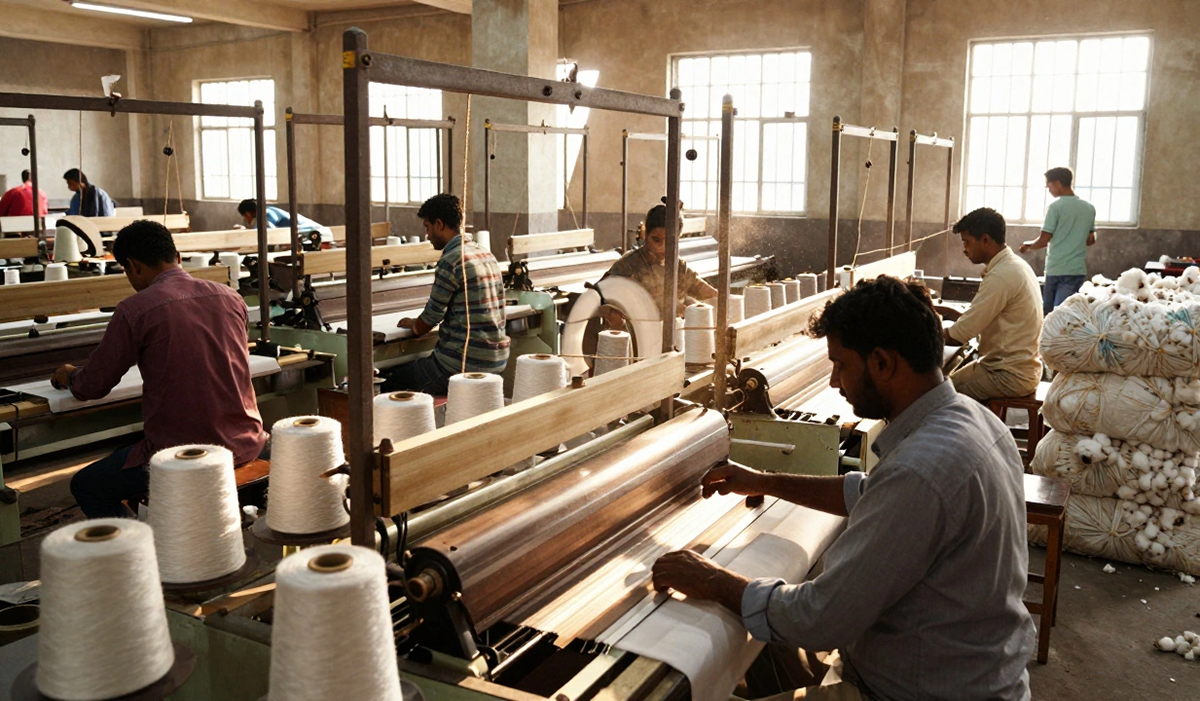
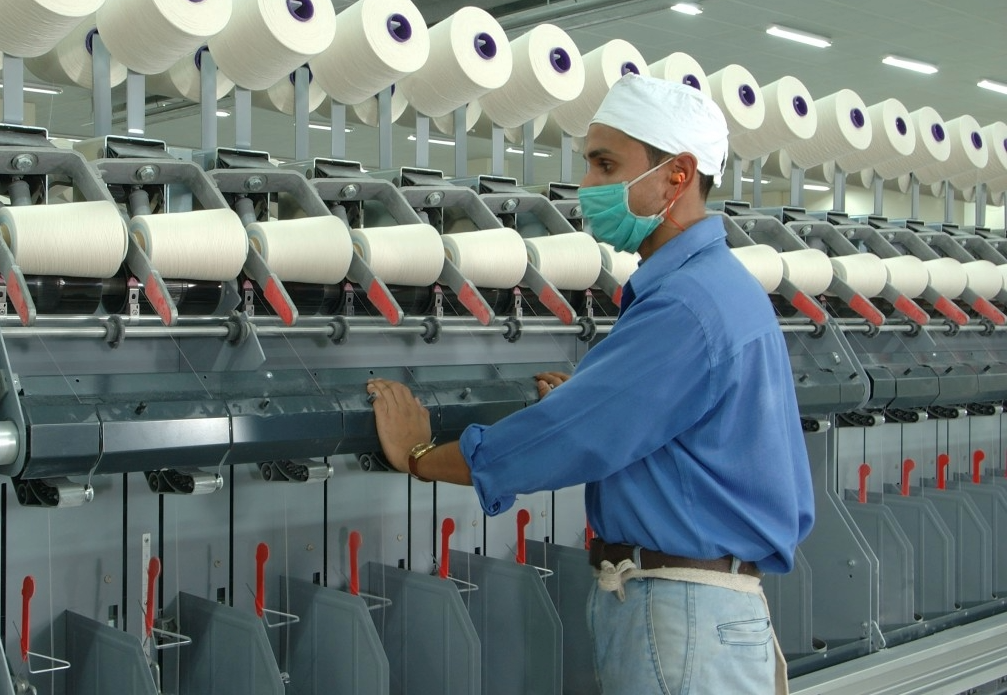
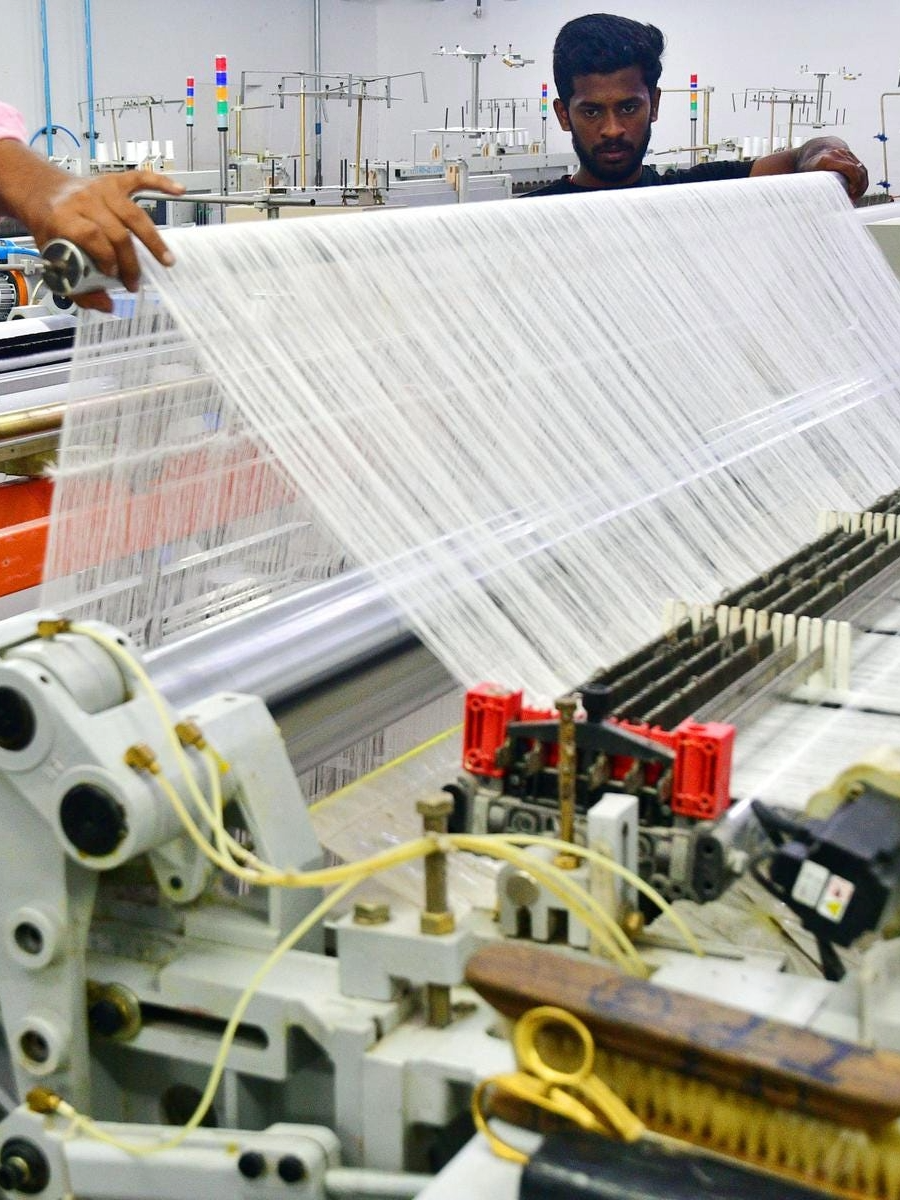
India has a rare advantage: it is not only a garmenting country. It has a broad textile base across raw materials, spinning, weaving, processing, garmenting, home textiles, craft, and domestic consumption.
India is the world’s sixth-largest exporter of textiles and apparel, with textiles and apparel including handicrafts accounting for 8.21% of India’s total exports in 2023–24. India’s share of global textile and apparel trade stood at about 3.9%, and the sector is one of the country’s largest employment engines.
India is the world’s sixth-largest exporter of textiles and apparel, with textiles and apparel including handicrafts accounting for 8.21% of India’s total exports in 2023–24. India’s share of global textile and apparel trade stood at about 3.9%, and the sector is one of the country’s largest employment engines.
The policy environment is also moving in the right direction. India has approved seven PM MITRA textile parks to create integrated textile value chains, while the PLI scheme targets MMF apparel, MMF fabrics and technical textiles. In April 2026, the government approved 52 new applications under the textile PLI scheme, including 19 for MMF fabrics, 18 for technical textiles, 5 for MMF apparel and 10 across multiple segments.
India can become a “credible alternative origin system”
The strongest buyer opportunity is not just cost reduction. It is risk architecture.
India can help buyers reduce exposure to:
• China concentration risk
• Xinjiang cotton risk
• tariff volatility
• single-country supplier dependency
• opaque intermediated sourcing
• over-reliance on synthetic-heavy supply chains
• future EU traceability and product-passport pressure
For buyers, this creates a new strategic role for India:
India can be the material-verification and diversification layer of a global sourcing portfolio.
That is different from saying India will replace China. China’s industrial depth, synthetic-material ecosystem, tooling speed, automation and manufacturing density remain difficult to replicate. But India can become highly valuable where buyers need traceability, cotton depth, supplier diversification, natural-material credibility, circular feedstock, and tariff-advantaged access to key markets.
India can help buyers reduce exposure to:
• China concentration risk
• Xinjiang cotton risk
• tariff volatility
• single-country supplier dependency
• opaque intermediated sourcing
• over-reliance on synthetic-heavy supply chains
• future EU traceability and product-passport pressure
For buyers, this creates a new strategic role for India:
India can be the material-verification and diversification layer of a global sourcing portfolio.
That is different from saying India will replace China. China’s industrial depth, synthetic-material ecosystem, tooling speed, automation and manufacturing density remain difficult to replicate. But India can become highly valuable where buyers need traceability, cotton depth, supplier diversification, natural-material credibility, circular feedstock, and tariff-advantaged access to key markets.
Where buyers can leverage India immediately
1, Traceable cotton and natural-fibre sourcing
India’s biggest immediate opportunity is cotton and natural-fibre traceability.
For buyers exposed to UFLPA risk, the problem is not only where garments are stitched. It is where cotton is grown, ginned, spun, blended, dyed and finished. India can become valuable if buyers help build traceable cotton corridors with:
- Farm-to-gin mapping
- Bale-level IDs
- Chain-of-custody documentation
- Spinner and mill verification
- Isotope or DNA testing partnerships
- Organic / regenerative certification
- Supplier-level digital product data
This is especially relevant because US compliance is increasingly focused on whether any part of the product is linked to restricted regions or entities.
2, Home textiles, cotton knits, denim and value-added apparel
India is already strong in categories where material depth matters more than pure speed:
• home textiles
• cotton knits
• denim
• shirts
• embellished garments
• handwork-heavy products
• artisanal and craft-led luxury categories
• natural fibre blends
• home textiles
• cotton knits
• denim
• shirts
• embellished garments
• handwork-heavy products
• artisanal and craft-led luxury categories
• natural fibre blends
These are strong entry points for buyers because they align with India’s existing industrial and material base. They also allow buyers to diversify without forcing India to immediately compete with China on ultra-fast, synthetic-heavy, high-volume categories.
3, Circular textile feedstock and recycled materials
India generates significant textile waste across industrial clusters. For buyers trying to build next-gen material pipelines, this creates a major opportunity: India can become a source of sorted post-industrial waste, recycled cotton, recycled yarn blends, and feedstock for textile-to-textile recycling.
The EU’s upcoming textile direction makes this more urgent because brands will increasingly need products that are recyclable, durable, repairable, traceable and, to a greater extent, made with recycled fibres.
The EU’s upcoming textile direction makes this more urgent because brands will increasingly need products that are recyclable, durable, repairable, traceable and, to a greater extent, made with recycled fibres.
4, MMF and technical textile co-development
India has historically been stronger in cotton than synthetics. But that is changing. The textile PLI scheme specifically targets MMF apparel, MMF fabrics and technical textiles, and recent approvals show investment momentum in those areas. (Press Information Bureau)
This matters because global apparel demand is not cotton-led alone. Sportswear, athleisure, performance wear, outerwear, footwear components and technical textiles require MMF capability. Buyers that enter early can shape supplier development before capacity becomes crowded.
This matters because global apparel demand is not cotton-led alone. Sportswear, athleisure, performance wear, outerwear, footwear components and technical textiles require MMF capability. Buyers that enter early can shape supplier development before capacity becomes crowded.
5, Tariff and market-access diversification
India’s trade-access position is improving. The India–UK CETA provides duty-free access to 99% of India’s exports to the UK, including labour-intensive sectors such as textiles and leather. (Press Information Bureau) Reuters also reported that the India–EU trade deal would reduce or eliminate tariffs on more than 90% of goods, with textiles among the major Indian beneficiaries. (Reuters)
This changes the sourcing equation. If Indian textiles gain improved access to the UK and EU, buyers can use India not just as a manufacturing hedge, but as a tariff-optimised sourcing node.
This changes the sourcing equation. If Indian textiles gain improved access to the UK and EU, buyers can use India not just as a manufacturing hedge, but as a tariff-optimised sourcing node.